Danile Ferreira notes that learning effective custom crochet order marketing is key to turning commission requests into loyal buyers today.
This short guide shows how to run a small handmade business with clear systems for managing orders. You will learn practical steps to handle inquiries, set boundaries, and protect your time and creativity.
We focus on simple actions you can take to convert a one-time request into a lasting relationship. These ideas help you build trust, keep repeat customers, and keep a steady stream of orders without burning out.
By using reliable processes and honest communication, you can create a reputation for quality and dependability. Implementing these tips will help your craft thrive in a busy market while supporting your lifestyle and goals.
Evaluating the Pros and Cons of Custom Crochet Order Marketing
Taking personalized projects can boost sales, but it often changes how you manage time and materials. Weighing benefits and limits helps you choose the best path for your shop and brand.

Benefits of Commissions
Accepting tailored work brings repeat customers and higher per-item revenue. It lets you showcase unique designs and build a strong brand voice.
Challenges of Time Management
Personal requests demand extra steps: sourcing yarn, fitting client specs, and meeting deadlines. High-volume sales via social media can cause burnout.
“Manage orders in waves of six to avoid feeling buried by requests.”
| Aspect | Pros | Cons |
|---|---|---|
| Income | Higher price per item | Irregular flow |
| Time | Fulfills niche requests | More prep and follow-up |
| Brand | Stronger client loyalty | Harder to scale shop |
Establishing Professional Policies for Your Crochet Business
Clear policies on your website protect your time and make the business feel professional. They reduce confusion and set firm expectations for clients.
Define your timeline and communication windows. Say how long processing takes, when you reply to messages, and what happens if an order needs extra time.
Post policies in your shop and on social media to build a consistent brand image. Serious customers respect clear steps, and this helps filter casual inquiries.
- Timeline: processing, production, and shipping windows.
- Payment terms: deposits, final payments, and refunds.
- Communication: response hours and revision limits.
- Order changes: deadlines and extra-fee rules.

| Policy Area | Why it Matters | Typical Term |
|---|---|---|
| Deposits | Secures time and materials | 30% upfront |
| Communication Window | Reduces back-and-forth delays | 48–72 hour reply |
| Timeline | Sets delivery expectations | 2–6 weeks depending on orders |
| Refunds & Changes | Protects both parties | Non-refundable after start |
Well-defined rules help prevent burnout and let you focus on growing the shop and marketing your work. Use these policies to keep customers informed and projects on track.
Pricing Your Handmade Creations for Profitability
Accurate pricing is the difference between a hobby and a sustainable craft business.
Start with a simple formula: materials + labor + overhead = base price. Track every material used, from yarn to safety eyes, and log small items like labels and stuffing.
Calculating Material and Labor Costs
Count materials for each project. Note yarn weight, colors, and other supplies. Sum those costs before you add labor.
Value your time. Estimate hours spent on a design, then set an hourly rate that reflects your skill and local living costs. Remember you sell expertise as much as products.
“Never underprice work — it harms your income and your creative energy.”
| Cost Area | What to Include | Example |
|---|---|---|
| Materials | Yarn, safety eyes, stuffing, labels | $5–$20 per item |
| Labor | Pattern time, stitching, finishing | $15–$40 per hour |
| Overhead | Packaging, shipping, fees | $2–$8 per order |
| Final Price Tip | Round up, include profit margin | Add 20–35% |
Use simple patterns to save time when needed, but factor in complexity for unique designs. Communicate your pricing so customers see the value of colors, materials, and skilled labor.
Streamlining Your Workflow from Inquiry to Delivery
A smooth workflow turns inquiries into finished pieces without burning extra time. Clear steps reduce mistakes and help your business scale while you keep quality high.
Using Inquiry Forms
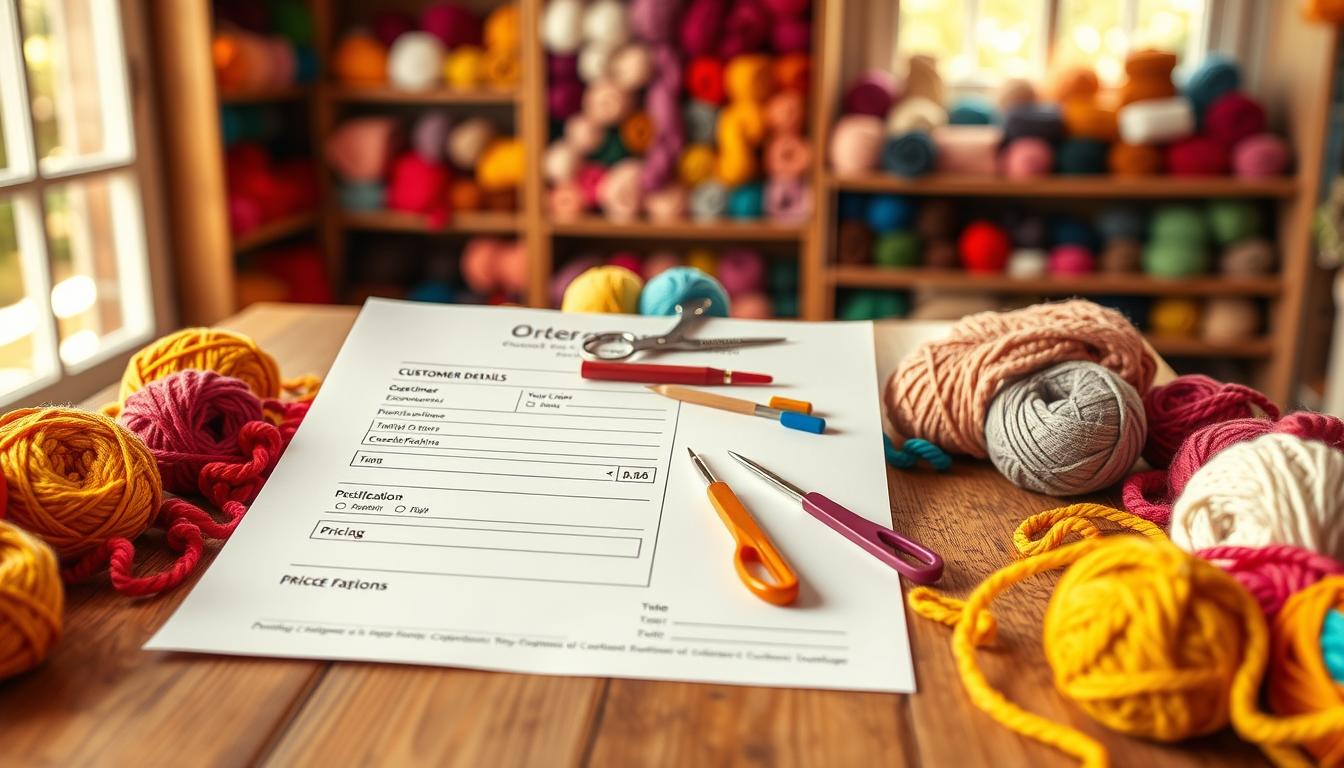
Use a Google Form to gather key info from people who message about a project. Ask for measurements, color choices, preferred patterns, and a target date.
Forms save replies and let you compare requests quickly. This keeps clients informed and speeds up how fast you accept or decline requests.
Managing Deposits and Payments
Collect a deposit when the customer approves a design. That protects your schedule and materials.
Offer secure options like PayPal or Venmo for local handoffs, following MrsCupCakeHanson’s approach. State your refund rules up front to avoid confusion.
Leveraging Progress Photos for Marketing
Share progress photos on social media to engage clients and grow your brand. Short updates build trust and can turn one sale into repeat sales.
Keep shots simple: materials, mid-progress, and the finished product. Save them to your website or shop to track sales and show target audiences what you make.
| Step | Tool | Benefit |
|---|---|---|
| Inquiry | Google Form | Faster intake, clear specs |
| Payment | PayPal / Venmo | Secures time and materials |
| Updates | Social media photos | Builds trust and future sales |
| Tracking | Website/shop | Organizes orders and expectations |
Managing Client Expectations and Difficult Requests
Protecting your time and craft begins the moment a customer asks for a change.
Maya, a part-time crafter, felt overwhelmed when a client requested major revisions to a unicorn amigurumi halfway through the project. Use that example to build policies that handle extra materials or new colors cleanly.
- Charge additional fees for extra materials or major design changes.
- Say no to requests outside your skill set or budget to avoid burnout.
- Refer to the original agreement if a customer is unhappy with the finished product.
Remain kind but firm when dealing with difficult people. Clear communication keeps your brand strong and helps clients trust your process.
Set boundaries on social media and in your shop. That filters unreasonable requests so you can focus on high-quality items and steady, manageable orders.
Conclusion: Building a Sustainable Crochet Business
Finish strong by focusing on systems that protect your time and grow your craft into a steady business.
Clear policies, steady processes, and honest communication help convert inquiries and small orders into loyal customers. Use social media to share progress and to remind clients why your products stand out.
Keep designing with care. Simple items and thoughtful designs both attract buyers when your brand shows consistent quality. Protect your schedule so you can keep creating without burning out.
Apply these steps today, and let your dedication to quality guide long-term growth.