Crochet Rush Order Fee Guide: How to Charge Extra Without Upsetting Customers

Running a small handmade business means balancing speed and quality. Implementing a clear extra charge for faster turnaround helps makers cover extra hours and materials. When a buyer adds a priority service to their cart, they pay for focused attention and quicker delivery.

Set simple, transparent rules so clients know what to expect. A clear structure keeps your enterprise sustainable and reduces confusion. Trust grows when policies are easy to find and fair.

Charging for expedited work also filters unrealistic timelines and rewards customers who value your time. This option helps you scale while protecting the care and craftsmanship each custom order deserves.

Understanding the Crochet Rush Order Fee

A clear expedited option helps buyers get a product sooner while compensating the maker for extra time. A common model is a $5.00 surcharge that covers prioritizing one specific item in the schedule.

Normal processing usually runs 3–5 business days. Selecting a 48 Hour Priority Processing service reduces that to 1–2 business days. When a customer adds this service to their cart, they secure a dedicated production slot for a specified date.

rush order

This supplemental charge often includes an upgrade to USPS Priority Mail so the item moves faster after shipping. Clear wording about what the service covers — faster processing time, the specific item prioritized, and the expected ship date — reduces questions and builds trust.

Make the terms visible at checkout and on product pages. Transparency keeps customers informed and helps your small business stay profitable while offering a dependable expedited service.

Setting Clear Policies for Expedited Processing

Clear processing windows keep expectations realistic and protect both the maker and the buyer. Define when your expedited service begins and how business days are counted.

expedited processing

Defining Business Day Counts

State your business hours as 9AM – 5PM EST. Any order placed in the 7pm – 8am Eastern time window will start the 24-hour processing count at 9AM the next business day.

Managing Shipping Transit Expectations

Make it explicit that weekends and holidays are not included in your business day count. Remind customers that processing time is separate from shipping time.

  1. Be clear you are not responsible for carrier transit delays.
  2. Give a realistic delivery estimate for busy seasons.
  3. Use a strict count for business days so all orders are handled consistently.
Rule Applies To Effect
Business hours 9AM – 5PM EST Start processing at 9AM
After-hours orders 7pm – 8am Eastern window Processing count begins next business day
Non-business days Weekends & holidays Excluded from delivery date calculations

Communicating Extra Charges to Your Customers

Telling buyers what extra services cost and why makes upgrades easier to accept. Clear, short explanations reduce confusion at checkout and help shoppers decide quickly.

Maintaining Brand Loyalty During Price Adjustments

Use the Handmade Product Pricing Calculator to confirm base prices before adding a rush order option. When you explain value with the Balanced Method, customers see the reason behind the extra cost.

  • Show the expected delivery date when a customer adds a rush fee to the cart.
  • Be honest about capacity and avoid taking on more orders than you can process well.
  • If you cannot meet an order within the requested time, politely decline instead of risking bad reviews.
  • Give clear updates about an item’s place in your production queue to build trust.

Frame any price adjustment as a step to protect the sustainability of your small business and the quality of each product. Positive reviews often praise makers who communicate cost and timeline clearly.

“Customers appreciate honesty—transparent timelines and costs lead to repeat business.”

Conclusion

Offering a paid priority service lets you plan production and honor delivery promises without stress. This approach protects your schedule and keeps customers happy with faster handling for a true rush option.

Use tools like the Balanced Method to price each product confidently. Make the expected delivery date and which item is prioritized clear at checkout so buyers know what to expect.

Stand firm on consistent policies. Protect your time, preserve quality, and encourage positive reviews by communicating timelines and sticking to them for every order.


FAQ

What is an expedited processing surcharge?

An expedited processing surcharge is an added cost applied when a customer requests faster handling or shorter lead times than your standard schedule. It covers extra labor, priority scheduling, and any service adjustments needed to meet an accelerated timeline.

When should I offer expedited service options?

Offer expedited options when your production calendar allows flexibility and when demand shows customers value faster delivery. Limit availability by item, weekday, or number of expedited requests per day to prevent disruption to normal workflows.

How do I set business day counts for standard and priority timelines?

Define clear business day windows for regular and priority timelines, excluding weekends and public holidays. For example, list standard fulfillment as 7–10 business days and priority as 2–3 business days, and display these on product pages and checkout.

How should I handle shipping transit expectations after faster processing?

Be explicit that faster handling shortens fulfillment time but does not change carrier transit days. Offer carrier upgrades at checkout for guaranteed faster delivery and include tracking so customers can monitor transit progress.

What is a fair surcharge amount to charge for expedited handling?

Calculate surcharges based on incremental labor, overtime, materials, and scheduling disruption. Many businesses use a percentage of the order total or a flat rate tiered by speed (e.g., 25% faster = $X, 50% faster = $Y). Test and adjust to balance demand and profitability.

How can I present extra charges without alienating customers?

Communicate value clearly: explain why the premium exists, outline what the fee covers, and show expected delivery dates. Use friendly language, offer alternatives like paid upgrades, and display reviews that highlight on-time, quality service to build trust.

Should I limit the number of expedited requests I accept each day?

Yes. Set a daily cap tied to staffing capacity to ensure quality. Publish the daily limit and current availability in your cart or checkout so customers see real-time options and avoid overpromising.

How do I display expedited options in the cart and at checkout?

Add a clear checkbox or radio button with descriptive text and price. Show updated processing dates and the revised total immediately. Include a short tooltip or link to a policy page that explains terms and refund rules.

Can I charge different surcharges by item or complexity?

Absolutely. Weight surcharges by item, material cost, or production complexity. High-effort items can carry higher premiums, while simple pieces can have a lower flat accelerated rate. Make these differences visible on each product page.

How do I handle refunds or cancellations for expedited requests?

Outline a clear policy: if production hasn’t started, offer a full refund of the premium; if work began, provide a partial refund or store credit. Communicate timelines for approvals and keep cancellation steps straightforward for customers.

What wording keeps policies transparent and customer-friendly?

Use short, direct sentences. State processing time ranges, what the premium covers, availability limits, and how it affects shipping. Avoid jargon and include examples of expected delivery dates to reduce confusion.

How should I track and analyze expedited request performance?

Monitor count of expedited purchases, average surcharge revenue, on-time fulfillment rate, and customer feedback. Use this data to tweak pricing, daily caps, and staffing so you maintain quality while meeting demand.

What alternatives can I offer customers who don’t want to pay extra?

Provide realistic standard timelines, gift-wrapping, or non-priority upgrades like express shipping only at checkout. Offer promotions that reduce the premium occasionally to retain price-sensitive buyers without changing base prices.

How do I maintain brand loyalty when charging more for faster service?

Emphasize reliability and transparency. Deliver on promised dates, solicit and display satisfaction reviews, and offer loyalty discounts or occasional waived premiums for repeat buyers. Consistent quality keeps customers coming back despite higher short-term costs.
Written by
Avatar photo
Miranda Leonardo

See Also

crochet gift order questions

Crochet Gift Order Questions: How to Help Customers Buy Personalized Crochet Presents

Jen Hayes Creations offers a practical starting point for shoppers who want to match makers with the right supplies. The ... [...]

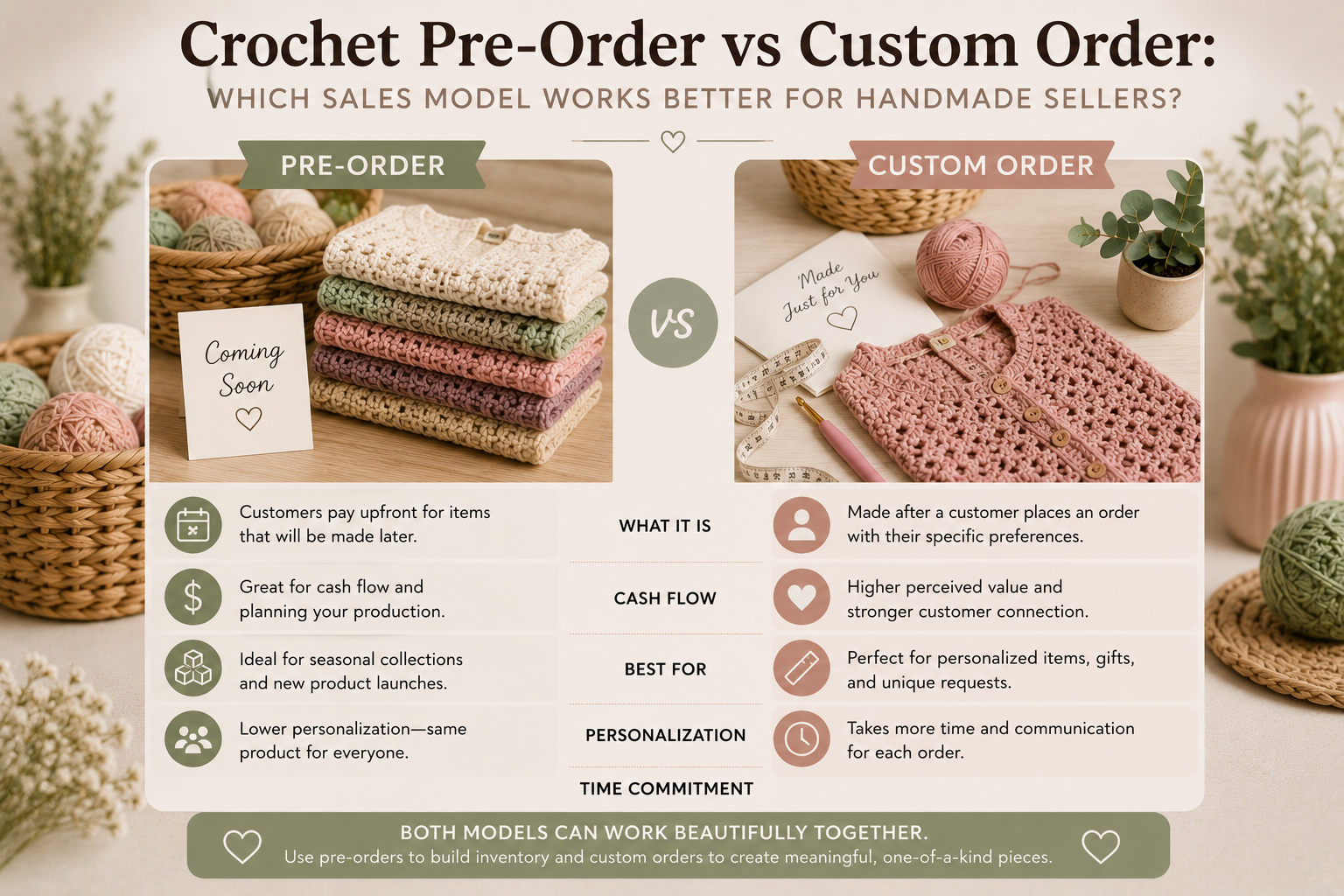
Crochet Pre-Order vs Custom Order: Which Sales Model Works Better for Handmade Sellers?

Deciding between a pre-sale model and tailored requests is a pivotal step for any maker growing a handmade business today. ... [...]

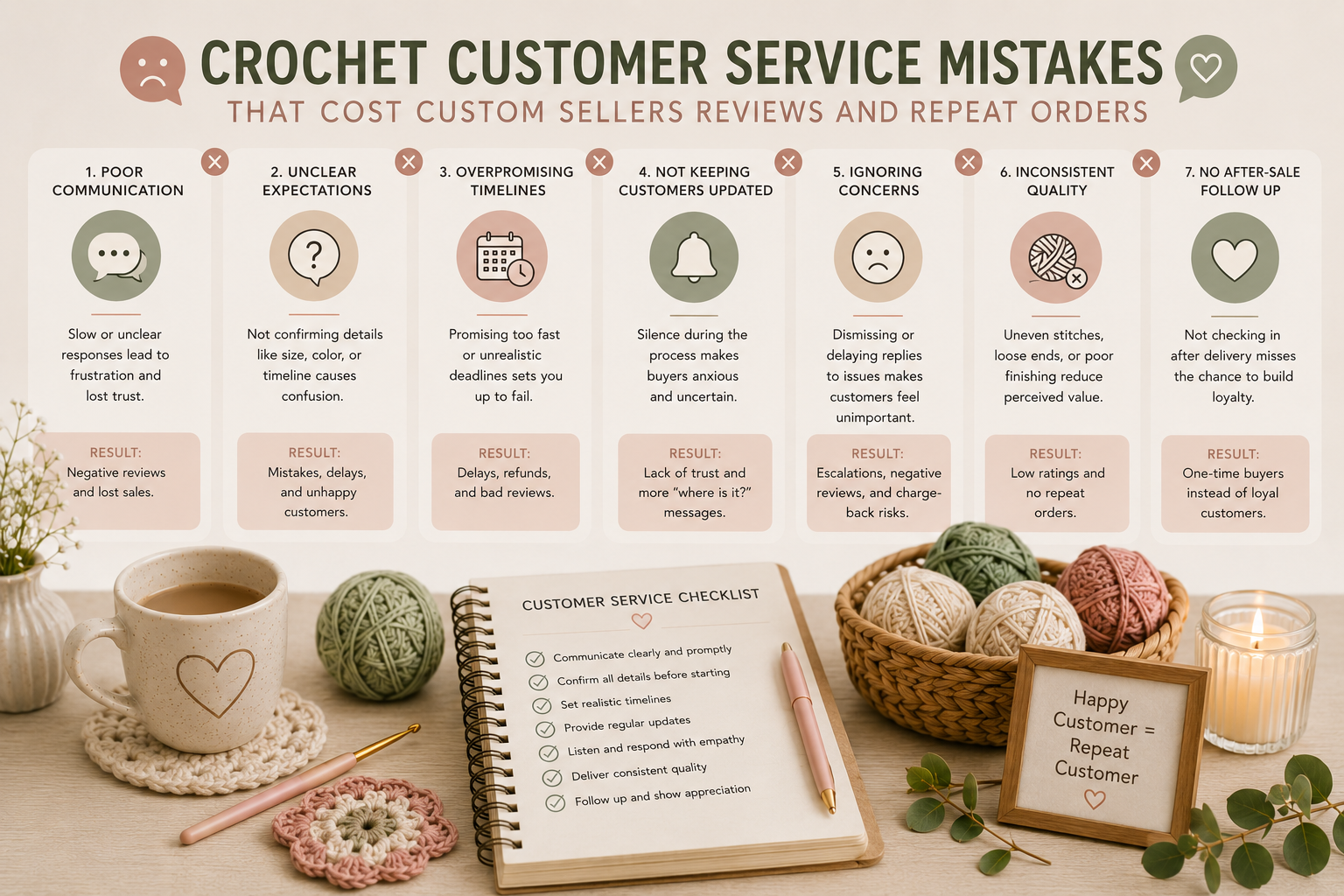
Crochet Customer Service Mistakes That Cost Custom Sellers Reviews and Repeat Orders

Nearly 9 in 10 buyers will return after a positive experience, so every chat and reply shapes your company reputation. ... [...]