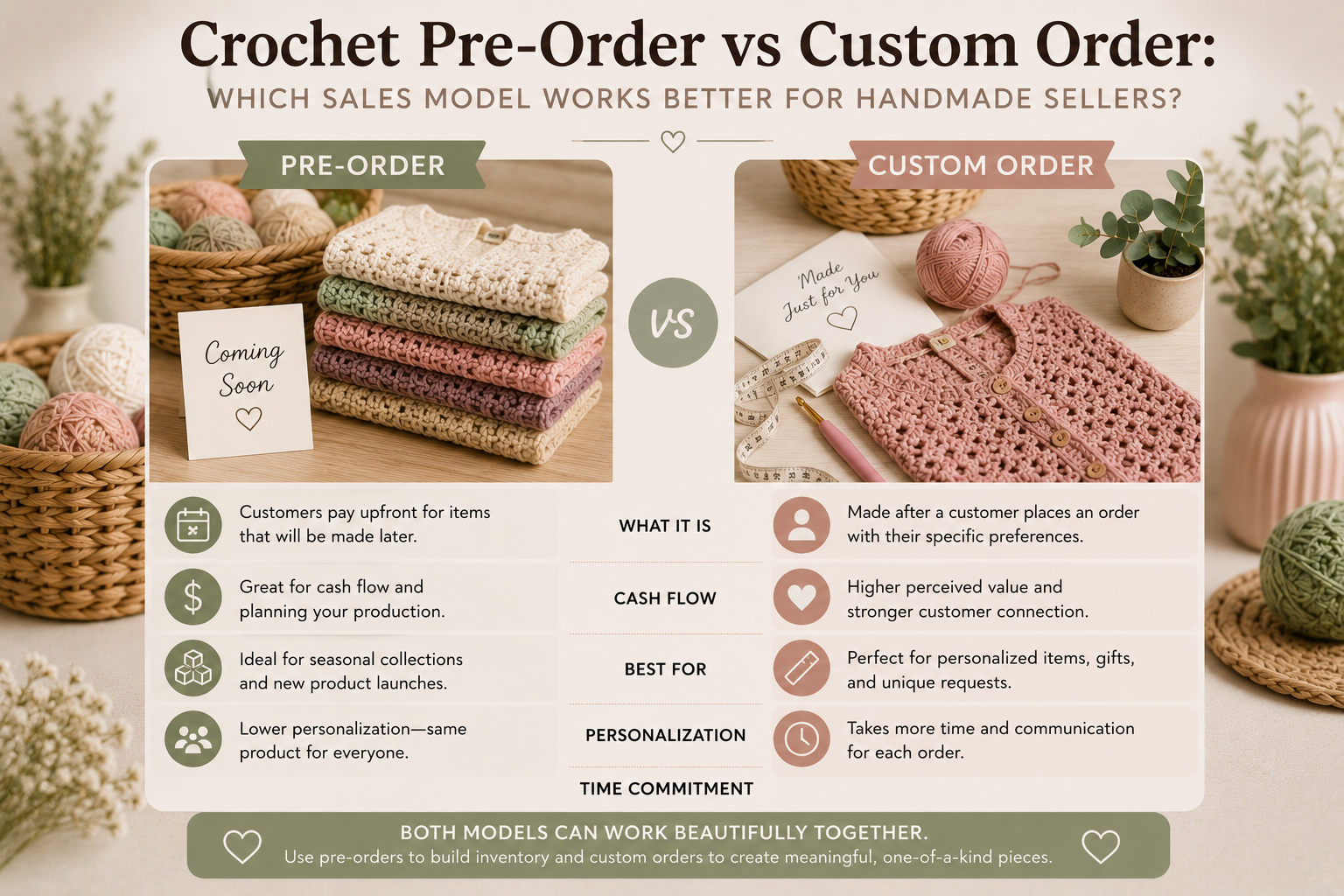
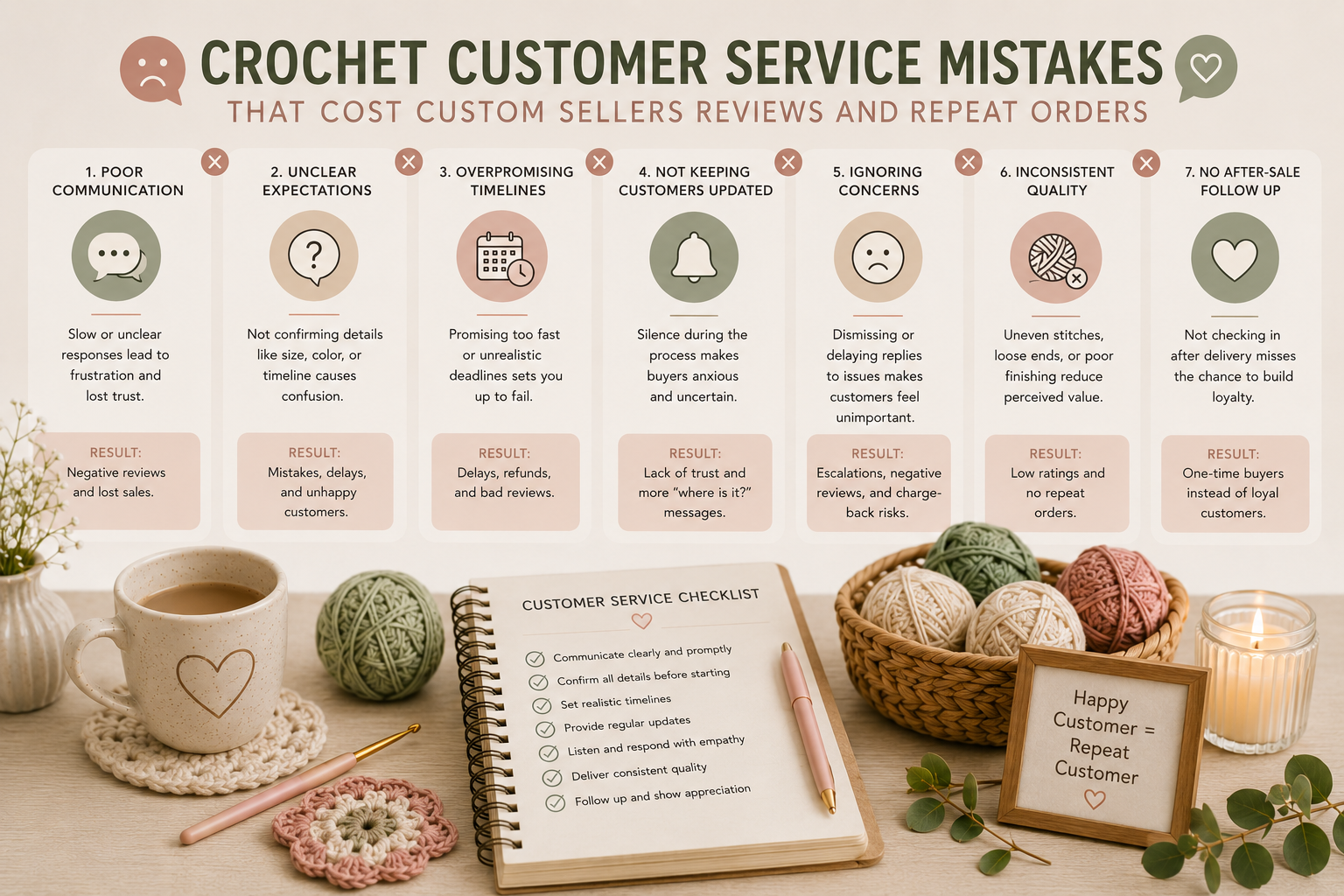
Deciding between a pre-sale model and tailored requests is a pivotal step for any maker growing a handmade business today. The choice shapes your schedule, cash flow, and stress levels.
Many makers begin by accepting every request. That route feels flexible, but it often creates an unsustainable stream of work and burned-out creators.
Understanding the differences helps you pick a clear path. One model favors ready-made runs. The other centers on bespoke pieces that need more time and communication.
Before you commit, evaluate your capacity. Consider how many simultaneous commissions you can handle without losing quality.
By aligning your goals and limits you build a more sustainable venture. That balance lets you enjoy the craft while meeting customer needs and growing a dependable business.
Understanding the Crochet Pre-Order vs Custom Order Business Models
Choosing how you sell handmade pieces shapes your schedule, cash flow, and creative energy. Many makers start by taking custom orders because they worry that people will not buy items already made.

A made-to-request model helps you build loyal clients and allows you to guarantee that each piece finds a home. That security removes the risk of unsold stock, but it also adds more messages, decisions, and time spent on each request.
Some sellers open a dedicated shop on Etsy or another marketplace to collect and manage requests. This creates a portfolio that showcases how you can make custom pieces and helps people find you.
- Relationship building is a big advantage.
- Managing many individual requests can strain capacity.
- Balancing demand with your creative vision supports long-term growth.
Weigh how much client contact you want against the freedom to produce ready-made items. That balance will guide a sustainable path for your business.
The Benefits and Challenges of Taking Custom Crochet Orders
Handmakers who take bespoke commissions often find deeper customer loyalty and more complex workflows.
Personalization and Relationship Building
Offering tailored pieces lets you create meaningful connections with customers. Repeat buyers come back for a specific design, size, or color palette that only you craft.
That relationship can raise your shop’s reputation and lead to steady work and referrals.
Managing Time and Client Expectations
Custom orders demand clear steps: confirm materials, set a timeline, and record exact colors and size. Without that, one project can double in time, like Maya’s amigurumi example.
Many new sellers face burnout when systems are missing. Set boundaries and a simple process to protect your life and hobby.
- Confirm design details before you start.
- Set realistic timelines and fees for extra requests.
- Use a short intake form to filter unrealistic questions.
| Benefit |
Challenge |
Quick Fix |
Outcome |
| Higher customer loyalty |
More time per piece |
Standard intake checklist |
Fewer surprises |
| Premium pricing |
Scope creep (extra design asks) |
Clear revision policy |
Protected margins |
| Unique portfolio |
More client messages |
Template replies |
Faster replies |
Why Selling Ready-Made Items Offers Creative Freedom
Selling ready-made pieces frees you from client deadlines and lets your imagination lead. This approach gives you space to test a new color palette or try a bold design without extra back-and-forth.
Building Your Brand Identity
Creating finished items helps you focus a single project and refine a visible style. Over time, that consistent output shapes how customers recognize your studio.
“A clear collection tells buyers what to expect and draws repeat traffic.”
When you produce ready stock, you control your work schedule and protect creative time. You can batch similar pieces to keep quality steady and reduce daily decision fatigue.
- Experiment freely with color and pattern without client pressure.
- Develop a catalog of items that define your shop’s look.
- Manage production time more predictably to avoid burnout.
Essential Systems for Managing Your Crochet Business Workflow
Simple policies and reliable tools keep projects moving and customers happy.
Setting Clear Policies and Boundaries
Write a short shop policy that states timeline, deposit, and a no-refund rule.
Make that policy visible on listings and in messages. This filters out people who do not respect your time.
Pricing Your Work Fairly
Account for materials, your hourly rate, and shipping when you price a piece.
For complex items like an amigurumi, include a margin for revisions and extra materials.
Handling Difficult Client Situations
Require a 50% deposit before you begin. It proves commitment and protects your calendar.
Manage requests in waves of six to avoid overwhelm, as Apple724 suggests.
“Consistent processes save time and build trust with repeat buyers.”
| System |
Why it helps |
Quick rule |
| Intake form |
Limits back-and-forth |
One form per request |
| Accounting app |
Tracks income and shipping |
Use Wave or QuickBooks |
| Wave scheduling |
Controls workload |
Open six requests at a time |
Conclusion: Choosing the Right Path for Your Handmade Journey
Find the model that protects your time while letting your craft shine. Pick the path that fits your pace and supports steady growth.
Whether you accept bespoke requests or sell finished pieces, build clear systems for intake, pricing, and timelines. Those systems make each order predictable and professional.
Let every incoming orders contribute to your progress, not to stress. Set firm boundaries, price fairly, and track what helps your business grow.
Revisit your approach as you evolve. Small adjustments keep your work joyful and profitable over the long run.
FAQ
What’s the difference between a pre-order and a made-to-request item?
A pre-order is a scheduled release where customers reserve an item before you produce it, helping you forecast demand and buy materials in batches. A made-to-request piece is crafted after the buyer provides specifications—size, color, or design—so it’s fully personalized and often takes longer to complete.
How should I set timelines for personalized projects?
Estimate each step: design time, material sourcing, crafting, finishing, and shipping. Add a buffer for life delays and supply issues. Communicate a clear timeline at booking and update customers if anything changes to keep expectations realistic.
Do I need a deposit for custom work, and how much is typical?
Yes, a deposit protects your time and materials. Common practice is 30–50% upfront for bespoke pieces. For large projects or new clients, consider a higher nonrefundable deposit. Spell out refund and cancellation terms in writing.
How can I price handcrafted pieces fairly without losing sales?
Calculate material costs, labor (hourly rate × hours), overhead, and desired profit. Factor in complexity and market demand. Use tiered pricing for add-ons like custom colors or special yarns. Test prices and gather feedback to find the balance.
What policies should be in my shop to reduce disputes?
Publish clear policies for lead time, deposits, cancellations, refunds, and revisions. Explain shipping responsibilities, handling of lost packages, and care instructions. Keep terms concise and place them where buyers must read before purchasing.
How do I manage color or material requests I don’t stock?
Offer yarn substitution options and show swatches or photos. If a specific brand or dye lot is required, require the customer to supply materials or accept a longer lead time while you source them. Document agreed substitutions in writing.
Can I take multiple custom projects at once without burning out?
Only if you set realistic capacity limits. Track ongoing projects with a simple calendar or project board, and accept new work based on your current timeline. Outsource tasks like stuffing or finishing if demand grows beyond your capacity.
How do I handle customers who change their minds mid-project?
Have a revision policy that specifies how many changes are allowed and at what stages. Charge for additional changes after a free revision limit. If a customer cancels after work has started, retain the deposit or charge for hours worked and materials used.
What’s the best way to display custom options without confusing shoppers?
Use clear option menus, labeled photos, and short descriptions for colors, sizes, and add-ons. Include an FAQ or ordering guide on the product page that explains lead times, deposits, and the customization process to streamline choices.
How should I handle shipping estimates for made-to-request pieces?
Provide two dates: a production completion estimate and a shipping arrival window. Use tracked shipping and share tracking numbers. Account for carrier delays and holidays in your estimates, and be transparent about international customs if applicable.
Are ready-made items better for building a brand than bespoke work?
Ready-made items can help establish a recognizable style and faster turnover, which supports consistent branding and marketing. Bespoke work builds strong customer relationships and can command higher prices. Many sellers use both approaches to diversify income.
How do I protect my designs when sharing custom sketches or photos?
Share low-resolution photos for approvals and watermark images on public listings. Use contracts for high-value commissions that specify ownership, usage rights, and whether you retain the right to reproduce the design for other clients.
What systems can I use to track orders, payments, and materials?
Use simple tools like spreadsheets, Trello, or Etsy/Shopify order management integrations. Track project stages, payment status, material inventory, and shipping details. Regularly reconcile payments and inventory to avoid surprises.
How much lead time should I offer for complex commissions like large toys or detailed pieces?
For intricate projects, plan several weeks to a few months depending on size and complexity. Communicate a minimum lead time on your shop and during initial inquiries so customers understand typical waits and you avoid overbooking.
What questions should I ask clients before starting a custom piece?
Ask about size, color preferences, intended use, target recipient (age, safety needs), budget, deadline, and any reference images. Clarify care instructions and confirm whether the client wants gift packaging or expedited shipping.
How do I handle difficult clients professionally?
Stay calm and document all communication. Refer to your policies and offer solutions: partial refunds, repairs, or adjustments when reasonable. If a client becomes abusive or unreasonable, you can politely refuse further work and follow your cancellation policy.
Can I offer rush services, and how should I price them?
Yes. Charge a premium—often 20–50% above standard pricing—based on how much you must reorder your schedule. Limit rush availability and clearly state turnaround expectations to avoid misunderstandings.
How do I showcase past custom projects without revealing client details?
Ask permission to share photos and blur or crop identifying features. Use before-and-after shots, staged product images, and anonymized testimonials. Highlight process photos to show craftsmanship without exposing personal data.
What should I include in a commission contract?
Include project scope, timeline, deposit amount, payment schedule, refund and cancellation terms, revision limits, copyright ownership, and delivery method. A brief, signed agreement reduces disputes and keeps both parties aligned.
How can I scale a handmade business that offers both ready-made and made-to-request items?
Standardize popular designs, create time blocks for custom work, build a reliable supplier list, and consider hiring help for repetitive tasks. Automate order confirmations and use templates for common messages to save time while maintaining quality.