Starting custom work right means clear terms up front. A simple, written plan helps any creative business protect time and costs when making custom items.
Many new sellers skip a required advance and end up stuck if a customer cancels. That gap can mean wasted yarn, lost hours, and unpaid labor.
This guide shows how to set a fair system that secures payment for materials and prep before you begin a product. You will learn steps to state terms on your website and keep customer relations positive.
Clear rules also shape professional expectations and reduce disputes. Treat the policy as a business tool that keeps your work sustainable and your brand trusted in the United States market.
Why Your Crochet Business Needs a Deposit Policy
When upfront funds are missing, small shops can quickly face unpaid labor and wasted supplies. That risk is real for any maker starting a new business in the United States.
Start-up costs often run between $100 and $300 for basic yarn, hooks, labels, and packing. Local city or county clerk offices may require a home-based business license that costs roughly $50–$100 a year.
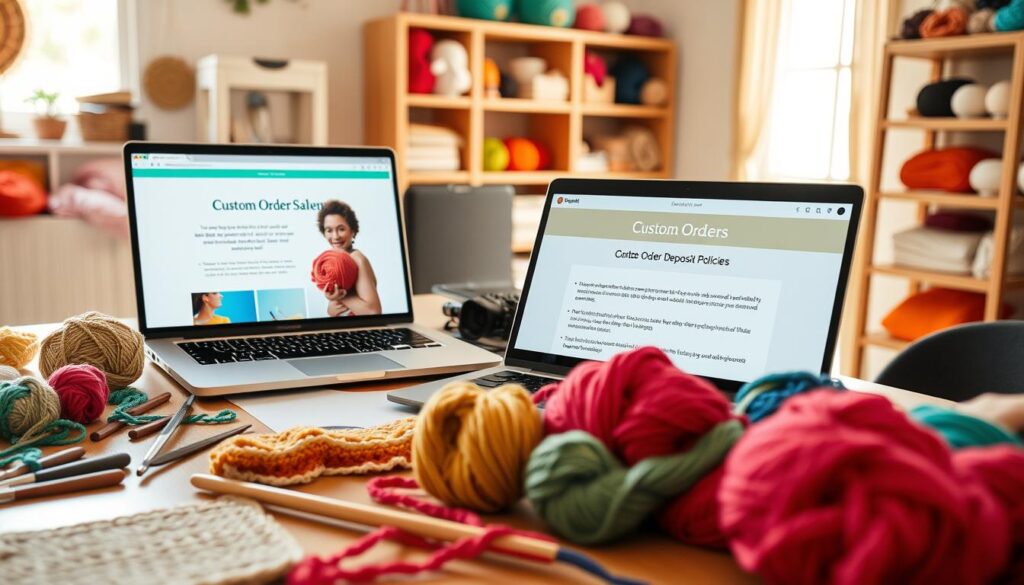
Requiring a partial payment protects owners and keeps sales steady. It helps when people change their minds and prevents last-minute cancellations from eating your margin.
Clear terms also save time. When a shop states its rules up front, fewer things go wrong in production and customer conversations stay calm.
- Financial clarity: Secures funds for materials and prep.
- Legal readiness: Check your local office for licensing details.
- Professionalism: Owners who require prepayment preserve cash flow.
Defining Your Crochet Deposit Policy Terms
Set clear terms for custom orders so you never start work without payment on file. A short, written section helps customers understand costs and timing before you begin a product.

Calculating the Percentage
A common example is to require a 50% non-refundable fee to cover material cost and secure the order. That split lets your business buy yarn, labels, and other items immediately.
Include how patterns and custom requests affect the final price. Complex patterns and extra time should raise the upfront amount.
Non-Refundable Clauses
State clearly that the initial payment is non-refundable to protect your time and the quality of the finished item. This rule draws a firm line so you are not left working for free.
- Example: 50% collected at booking, remaining 50% due at completion.
- Note when the deposit is collected and when refunds, if any, apply.
- Explain how cancellations affect materials and scheduling.
Communicating Your Policy to Customers
Good listings answer questions before customers hit the contact button. Clear messaging on each product page improves trust and helps convert viewers into buyers. Etsy shops often see only a 1–3% conversion rate, so clarity matters.
Transparency in Item Descriptions
Use your website or etsy shop listing to state the 50% upfront rule and timing for the remaining balance. Make this text part of every product description so buyers see it before checkout.
Explain how a pattern or custom request changes price and lead time. Say whether the initial payment is non-refundable and why. Keep sentences short and direct to avoid extra emails.
- Place clear terms on the product page so customers know what to expect.
- List estimated materials, ship windows, and any extra fees for complex patterns.
- Link to a single site page with full information to manage expectations.
Answer common questions in the listing to cut back on follow-up emails. That practice saves time for your business and reduces friction at every sale.
Managing Financial Risks and Order Fulfillment
Protecting income starts with a system that tracks money and time for each custom order. Use clear steps to record costs, timelines, and customer info so each sale stays profitable.
Tracking Expenses
Log every cost for yarn, labels, shipping, and any pattern fees. Track hours spent on an item so you know true cost and profit per product.
Using Project Management Tools
Use a simple board or spreadsheet to track progress and hit the four-week completion window for commissions. Sync payments with orders and note the JIM app fee of 1.99% to protect margins.
Handling Cancellations
State how cancellations affect materials and time. A clear line in your terms helps you retain funds for work already done and avoids losing money.
| Area | What to Track | Typical Timeline | Impact on Profit |
|---|---|---|---|
| Materials | Yarn, labels, shipping | Immediate | Increases cost |
| Labor | Hours per item | During build | Affects price |
| Payments | App fees (1.99%) | At sale | Reduces margin |
| Cancellations | Refund rules | Depends | Manages risk |
- Keep customers updated with clear information to cut questions and returns.
- Track every custom product to protect quality while growing income.
Legal Considerations for Custom Crochet Commissions
Running a small custom shop means knowing the legal lines that protect your work and reputation.
Forming an LLC can shield owners from personal liability. State fees run about $50 to $500. Check with your local clerk office or a lawyer to register correctly.
Copyright issues matter. Using someone else’s pattern, image, or character can bring fines up to $150,000 per instance. Always confirm you hold the right to use a design before you sell a product on your website or etsy shop.
- Keep every page of your site original and clear to avoid legal risk.
- Document permissions for any third-party pattern or image you use.
- Consult a professional for questions about contracts and licensing.
| Risk | Action | Impact |
|---|---|---|
| Liability | Form LLC, register with state office | Protects owners’ personal assets |
| Copyright | Use original patterns or get written permission | Prevents severe fines and lost profit |
| Listings | Keep product information accurate on each page | Builds trust and reduces questions |
Handling Common Objections and Questions
Addressing buyer concerns clearly helps turn hesitations into confirmed orders. Short, calm answers keep conversations focused and reduce delays.
Maintaining Professionalism During Negotiations
Explain the value. Tell customers that the upfront amount covers materials and the time needed to make a high-quality product. Mention how a complex pattern or custom request can change the cost or timeline.
If people object to your rules, respond calmly. Say the rules protect both the shop and the buyer. Keep sentences polite and direct.
- Use clear emails to answer each question and avoid long threads.
- Repeat consistent information on the website and product page.
- Stand firm when needed to protect your income and time.
Handling objections well keeps sales steady and preserves profit. With steady messaging, you spend less time on disputes and more time making great items.
Conclusion
A firm set of terms makes it easier to focus on craft and growth without financial worry. Clear rules protect your time, cover materials, and reduce stress during busy seasons.
State those terms on your website so buyers see expectations early. Treat each custom item as a paid commitment to quality and timely delivery.
Use straightforward language and a short agreement to limit disputes and keep work profitable. Start using these steps today to build a stable, professional shop that supports long-term growth.