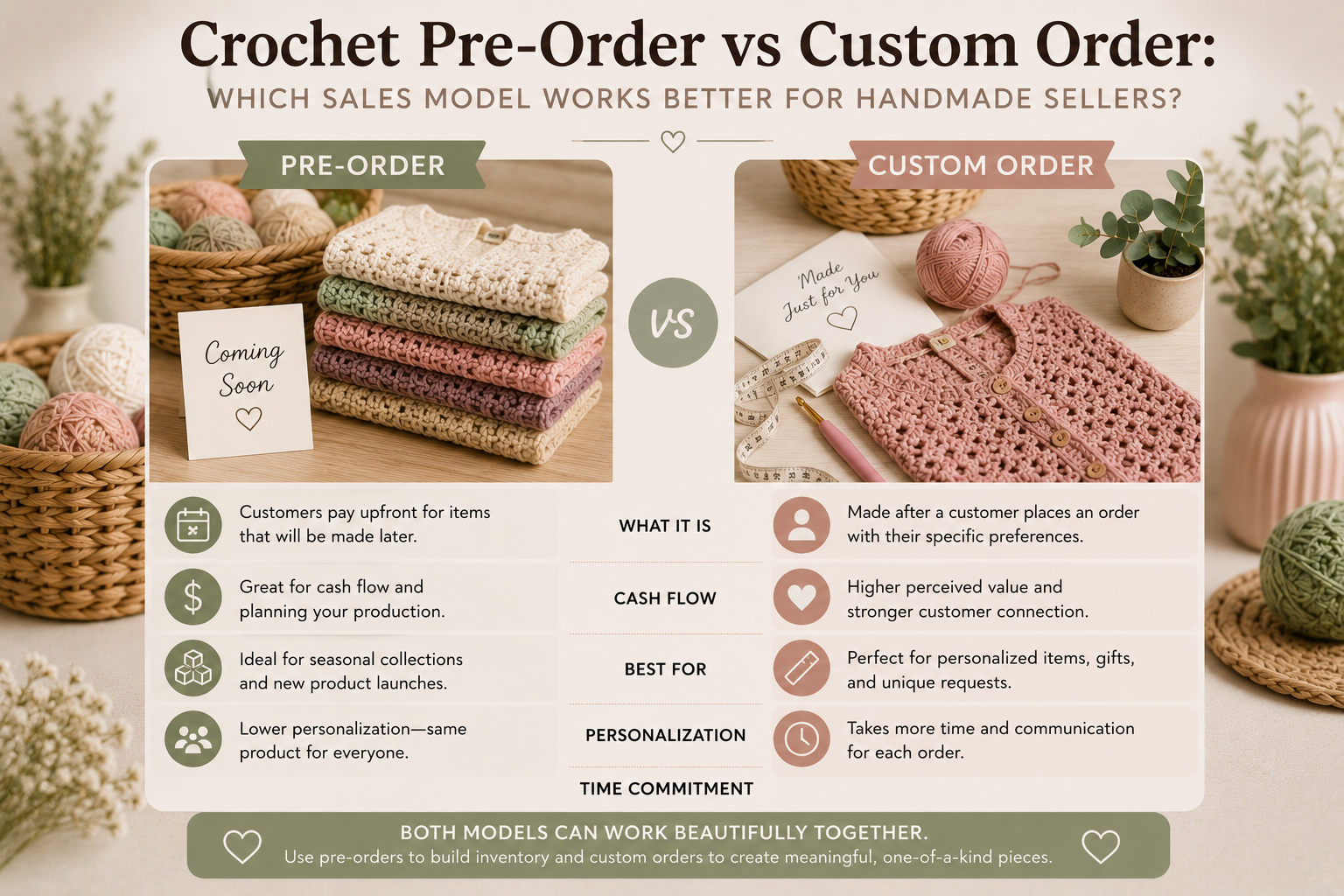
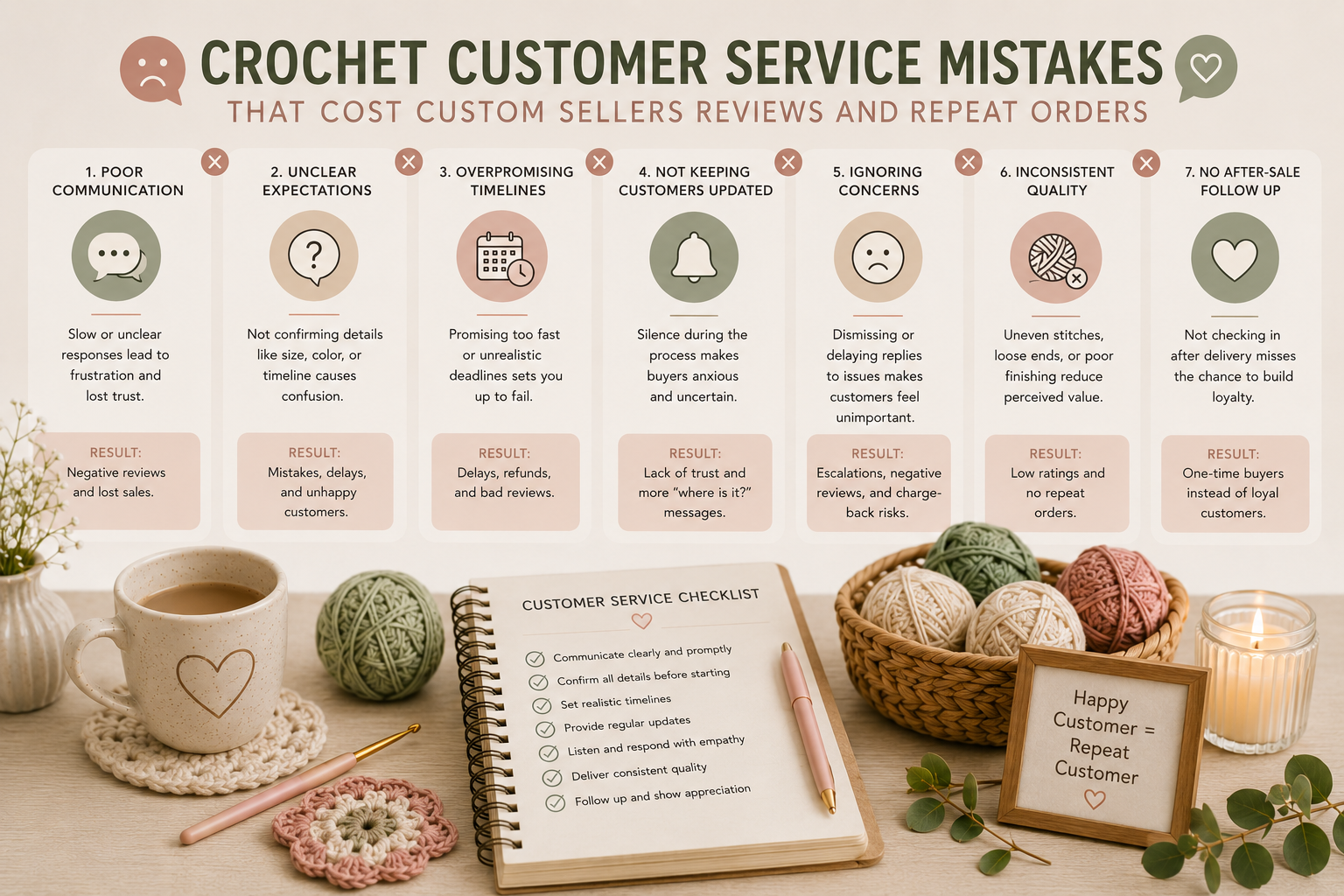
Starting a custom project began with clear, focused planning. A well-crafted client intake form turned casual chats into a reliable plan. This step helped makers capture size, color, function, and timing before work began.
Using a simple intake form reduced mistakes and kept expectations aligned. It also saved time by setting budget and delivery details early. Buyers appreciated the clarity and professionalism this brought to the process.
For fiber artists, the client intake process served as a creative map. When you gathered key details up front, the final piece matched both style and daily needs. That care built trust and encouraged repeat orders from your local and online community.
Why Your Crochet Business Needs a Professional Intake Process
A structured intake process turns scattered requests into clear project plans. A solid client intake form protects your time and sets expectations from the start.
Elizabeth Bailey of ActiveCampaign stresses that a client intake form is central to building a strong client relationship. That single form can guide each step of onboarding and improve communication.
Sarah Stein of Miss Efficiency shows how automation makes this work. Automating forms and follow-ups cuts hours of manual email and frees you to focus on creative work.

Without a formal form, scope creep often appears. A repeatable process helps you qualify a new client and decide if a project is a good fit.
- Standardized forms create consistency across requests.
- Structured steps make billing, timelines, and revisions clearer.
- Better forms build professional relationships that encourage referrals.
Start with a simple client intake form and refine it. Each small improvement saves time and strengthens your business.
Essential Crochet Customer Intake Questions to Ask
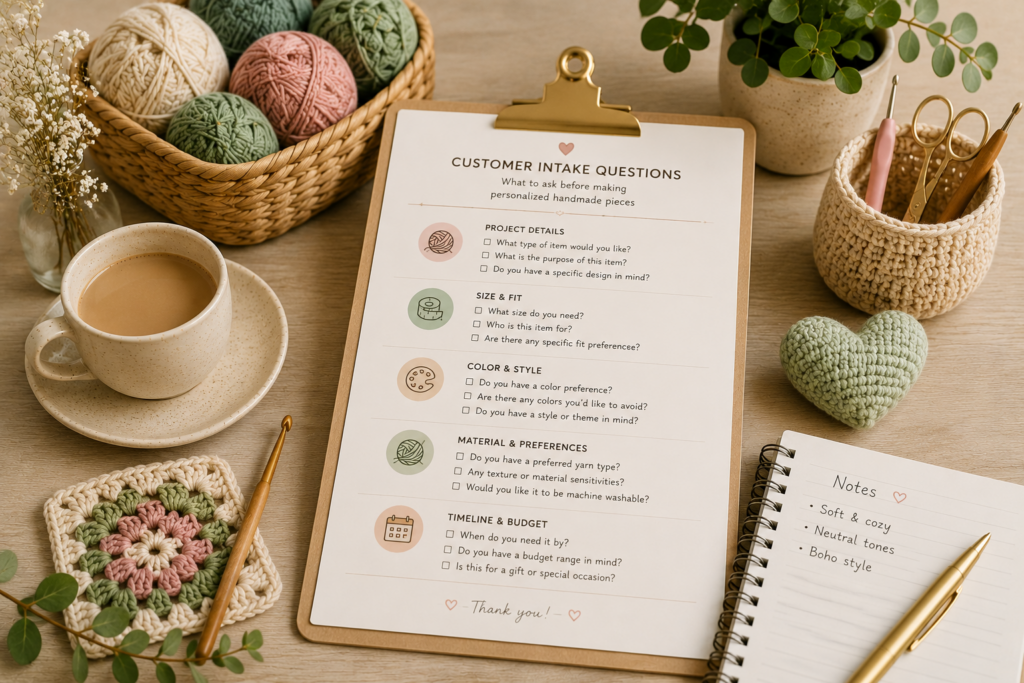
Collecting the right information early prevents costly changes later in the process. Use a concise client intake form to capture size, scope, budget, and timeline before any work begins.
Project Scope and Size
Ask for dimensions, quantity, and intended use. Clear fields for measurements and material type stop guesswork. This data keeps the project on track and helps you estimate time.
Budget and Timeline
Include a budget range and a target delivery date. Knowing if a request is for a special event changes priorities. A transparent budget question prevents scope creep and speeds approvals.
Aesthetic Preferences and Inspiration
Request color choices, texture preferences, and any reference images. Ask about sentimental items or styles to match the client’s vision. Standardized fields for design choices reduce revisions.
| Field | Why it matters | Suggested input |
|---|---|---|
| Contact information | Needed to confirm details and timelines | Name, email, phone |
| Project size | Determines materials and time | Measurements, quantity |
| Budget & timeline | Aligns expectations and schedule | Price range, delivery date |
| Design notes | Captures style and inspiration | Colors, images, sentimental details |
Designing Your Custom Order Intake Form
A smart form design turns vague requests into clear, actionable steps for a custom order. A well-organized client intake form saves time and keeps scope clear. It also improves the way you collect contact information and project details.
Best Practices for Form Fields
Start with the essentials: name, email, phone, project size, and scope. Keep the number of form items small so a new client won’t abandon the page.
- Use a drag-and-drop form builder like Formstack to build a professional form without coding.
- Apply conditional logic so clients only see fields that match their project type or size.
- Include a short budget field and a clear section for contact information and timeline.
“Good forms reduce back-and-forth and let makers focus on the work that matters.”
| Field | Purpose | Design tip |
|---|---|---|
| Contact information | Confirm details and send updates | Use short required fields: name, email |
| Project scope | Define size and materials | Add conditional fields by project type |
| Budget & timeline | Set expectations early | Offer ranges and an optional email follow-up |
Test the form template and review responses to spot drop-off points. Lexicata shows that specialty tools can add e-signatures and white-labeled templates for a professional finish. Regular reviews keep the form aligned with your business goals.
Choosing the Right Tools for Your Handmade Business
The right tech stack can cut repetitive work so makers focus on real creative tasks. Automation frees time and makes each new form entry actionable instead of another inbox item.
Heather Read, a family photographer, saw the change firsthand. “Automation eliminated 30% of my work and let me focus on leads that convert into clients,” she said.
Use a strong form builder that routes submissions to a dashboard or project board. The monday.com AI Work Platform links intake forms directly to workflows so no request gets lost.
- Automate routing so replies and status updates happen without manual steps.
- Connect forms to a management system to track status, due dates, and client notes in one place.
- Pick templates that match your workflow and collect the exact data you need.
When tools work together, every new intake form arrives with the right fields and context. That reduces back-and-forth and speeds delivery in a busy handmade business.
Managing Client Expectations After the Initial Request
Defining boundaries and timelines right after a new request keeps projects on track. Start by confirming the details you captured in the client intake form. This simple step reminds everyone of the agreed scope and budget.
Setting Clear Communication Boundaries
Set office hours for replies and explain preferred contact methods. Note whether updates arrive by email or a project board. Be explicit about response time so clients know when to expect answers.
Reference the intake form when discussing changes. Pointing to the original fields and answers prevents confusion. It also keeps the relationship professional and trustful.
Handling Revisions and Feedback
Create a simple revision policy that defines how many rounds are included and what costs extra. When a client asks for changes, check the client intake to see if the request fits the original scope.
- Document all feedback in one place.
- Return a written quote for changes outside scope.
- Set clear dates for each revision step.
Using a consistent form and process reduces surprises. It keeps work moving and protects your time while meeting the client’s goals.
Conclusion
A simple, repeatable process keeps projects moving and reduces surprises. Use a clear client intake to qualify each new client and set expectations fast.
A well-designed form and an intake form template collect essentials like size, budget, and timeline. That clarity scopes the project and speeds decisions.
Regularly review your client intake and intake forms to spot gaps. Small updates save time and protect your business margins.
When you master this process, you free more hours for craft. A solid administrative foundation means better work, steady growth, and happier clients.