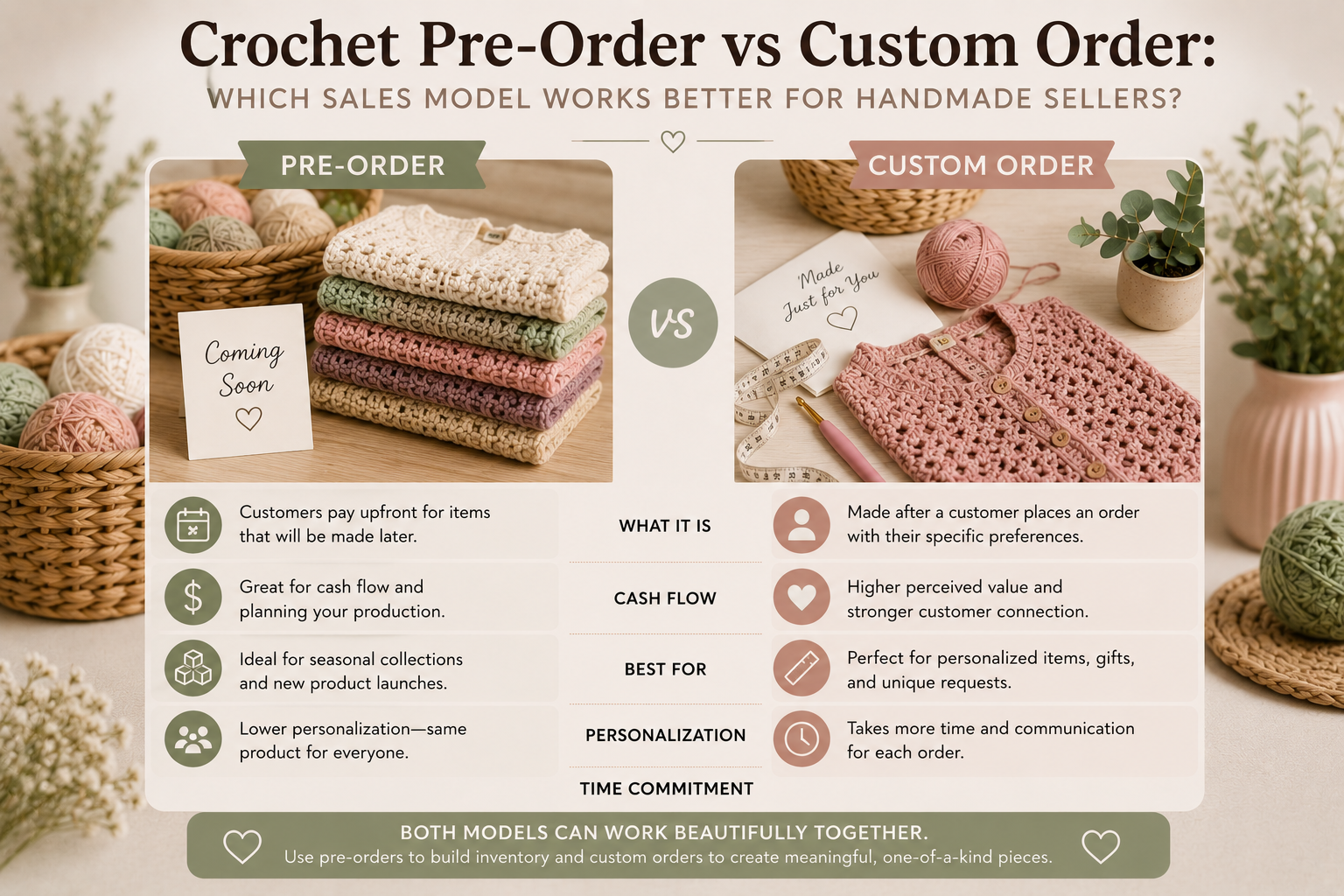
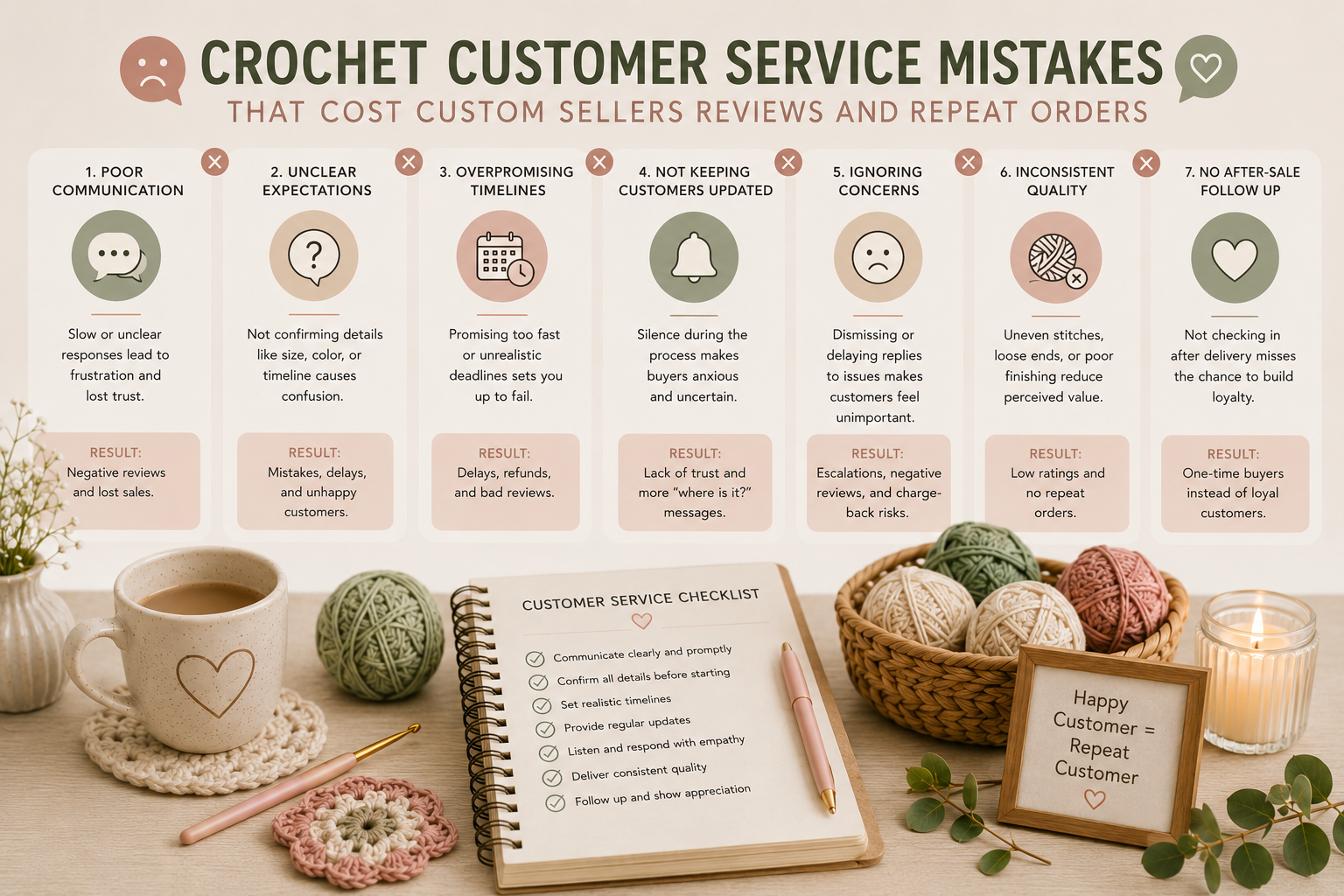
More than 60% of new makers report burnout in their first year. Many sellers discover that a clear approach to handling each order prevents that stress.
When you accept a commission, you enter a professional agreement. Setting expectations around time, shipping, and the produced item helps protect your creative energy.
A written rule for every item keeps the shop joyful instead of draining. Clear steps for handling a refund or a change build buyer trust and reduce repeated back-and-forth.
Whether you craft complex commissions or simple accessories, firm shop rules protect your rights and pay. Start with short, fair terms that state how you handle orders and shipping.
Protecting your time means protecting your art. A simple, readable plan keeps clients informed and your business sustainable.
Why You Need a Professional Crochet Refund Policy for Custom Orders
Undefined expectations turn simple commissions into long nights and lost pay. Maya took a unicorn amigurumi order without written terms and spent twice the time she planned. She earned far less per hour and felt burned out.
Professional policies protect your shop and your creative process. Clear rules tell clients how you handle each order and what extra work costs. This prevents last-minute changes that turn one item into many hours of unpaid labor.
A solid business framework also improves buyer experience. Clients who see clear terms are more likely to respect deadlines and deposits. That respect helps you deliver higher-quality items without stress.
Treating commissions like a paid service attracts clients who value your skill. Early rules make it easier to manage requests, keep profit margins healthy, and preserve your energy as a maker.

Essential Terms to Include in Your Business Policies
Good terms protect your time and make expectations clear. Include short, practical rules that explain how you handle orders, shipping, and intellectual property.

Defining Non-Refundable Custom Work
Commissions are non-refundable because each item is made to order. Processing can take up to 4 weeks after placing order requests. Buyers agree to service terms when they complete a purchase.
Handling Shipping Complications
State that shipping may take weeks depending on volume. If a package is returned due to an incorrect address, charge a $6 fee to resend the item.
If a customer received wrong or damaged items, document the return. You may offer a refund or replacement at your discretion once the return is verified.
Protecting Your Intellectual Property
Every pattern you sell is copyright protected. Sharing or reselling the pattern violates terms and may lead to removal or legal action.
“Clear terms help customers understand that an etsy shop is a business that requires respect for the maker’s time.”
| Term | What it means | Action |
|---|---|---|
| Processing time | Commissions may take up to 4 weeks to process | Notify buyers on purchase |
| Returned packages | Customer error returns | $6 resend fee |
| Pattern use | Copyrighted material | No sharing or resale |
If you have questions about an order, please contact [email protected]. Note: never ask for credit card details by email; always use your secure site.
Managing Client Expectations and Workflow
Setting small checkpoints prevents last-minute surprises and lost time. Use a clear timeline so clients know when you will start, when proof is due, and when an item ships.
Streamlining Communication and Deposits
Require a 50% deposit before you begin any custom order to secure commitment and cover initial cost. Note that customers have 28 days to answer questions; if they do not reply, you may cancel the order and issue refunds.
Keep a dedicated business email to track requests, shipping updates, and questions. When an order shipped status is reached, provide the tracking number so the client can follow their item.
- If a customer received wrong items, please contact them immediately to offer a refund or replacement.
- For hoodies and T-shirts you may use Printful to manage shipping, but tell clients how long production may take.
- Post your policies clearly on your site so buyers know returns are not accepted for made-to-order work.
If a client is rude or refuses to pay, you have the discretion to walk away from the sale to protect your business. Always process credit card payments securely and never ask for sensitive card data by email.
Conclusion: Building a Sustainable Crochet Business
A short, fair set of rules saves weeks of confusion and keeps your studio calm. State a clear policy that values your time and sets expectations for each order.
Make terms about deposits, shipping, and returns easy to read. Note how long the process takes, mention pattern use, and explain when refunds or replacements apply.
Post your shop contact address and a business email so clients can ask questions. Never share credit details by email; direct payments through your secure site.
Stick to written policies and revisit them as you grow. Doing this now buys you weeks of peace and lets you focus on creating beautiful items.