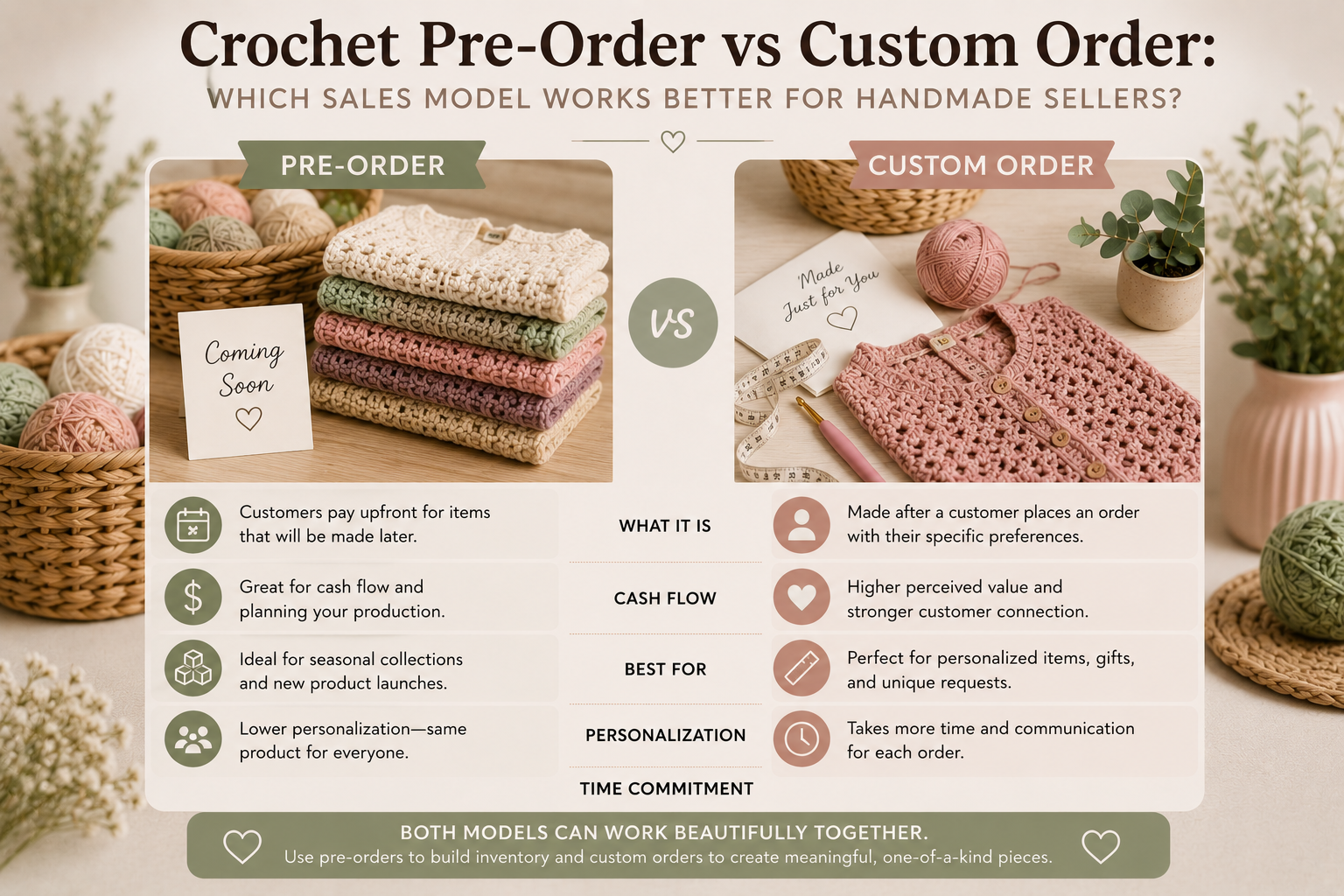
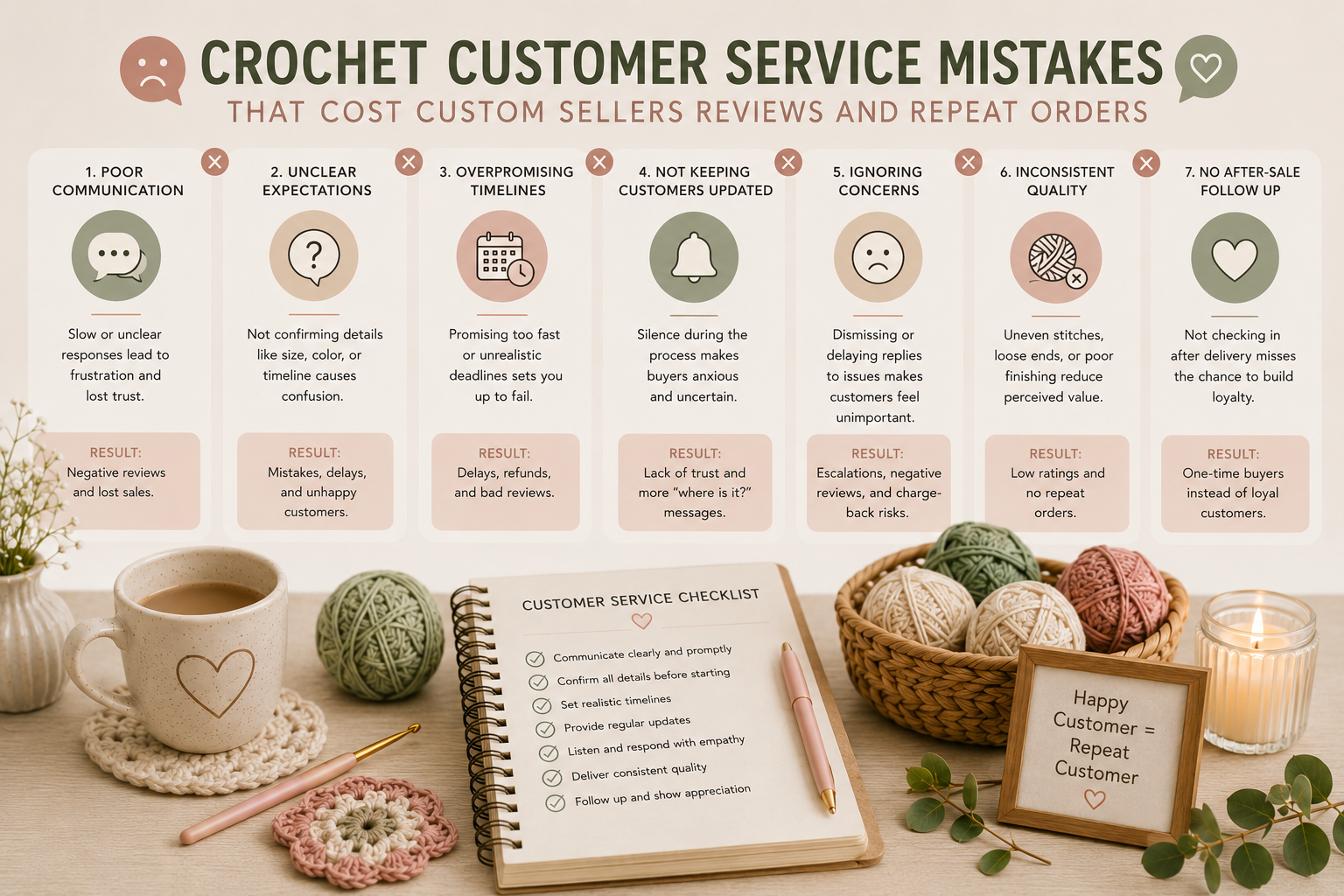
Alexandra Richards of Eye Love Knots has run her shop for about a year and a half. Her steady growth shows the patience and systems needed to succeed with made-to-order work.
Using a clear intake flow helps you filter incoming requests before you spend time on a single order. It also lets you spot which customers value your skills and will pay professional rates.
Many new sellers struggle when they quote too soon. A short set of questions protects your time and keeps your creative process intact.
With firm boundaries and a repeatable intake, you avoid burnout and accept projects that match your business goals. This opening step keeps pricing fair and expectations clear before you deliver any formal quote.
Why You Need a Custom Crochet Consultation Script
Filtering requests with a brief intake helps you focus on work that fits your goals and timeline. Many makers spend years honing their craft, yet they still feel swamped when crochet orders arrive through an online shop.
Alexandra Richards of Eye Love Knots ties a clear mission to every sale and donates part of her earnings to the National Retinoblastoma Research and Support Foundation. That purpose helps her set boundaries and keep the joy in her items.
Without an intake process, your love for the craft can be buried under confusing messages from customers. Over 60% of new sellers report burnout in their first year because they lack systems to handle custom orders.
Using a short intake protects your time and energy. It clarifies timelines, confirms budgets, and filters requests that don’t fit your etsy shop terms.

| With Intake | Without Intake | Benefit |
|---|---|---|
| Clear timelines | Late surprises | Less stress |
| Filtered requests | Unpaid revisions | Better profit |
| Professional storefront | Unclear expectations | Stronger brand |
Setting Professional Boundaries for Custom Orders
Clear boundaries keep your shop profitable and protect your time so you can make better items.

Defining Order Timelines
Post a firm timeline on your website and etsy shop so buyers know when to expect finished goods.
Industry practice sets a 3–4 week timeline from approval to shipment. No rush orders keeps quality high.
Establishing Payment Terms
Require a 50% deposit to begin work and collect the balance before shipping the final order.
This protects material costs and confirms buyer commitment.
“Clear timelines and upfront payment terms reduce confusion and help every order run smoothly.”
- Display timeline and payment details on your website.
- Use the etsy shop listing to repeat the same policies.
- Stick to these standards to deter unserious buyers and attract respectful clients.
Designing an Effective Intake Form for Potential Customers
A single, well-designed form makes each request actionable and prevents guesswork. Use a short intro on the page to tell customers what to expect after they submit the form.
Essential Details to Collect
Build a form that captures the basics first: customer name, email, and order type. Include fields for item, piece, and whether the project is a baby blanket or another item.
Ask for yarn, fiber, materials, and color choices so you can confirm availability. Request sizing, timeline, and budget to filter requests that won’t fit your shop workflow.
- Photos or design references to reduce revisions and set clear design expectations.
- A notes box for extra detail and any questions the customer has.
- Fields for pricing expectations and final delivery date.
Host the form on your website or link it from your etsy shop. Using a Typeform integration lets you automate submissions to email, Slack, or Zapier so specifications land in one organized place.
Collecting complete specs up front saves time and improves final results.
How to Price Your Work Fairly Before Quoting
Before you send a quote, build a simple cost checklist that covers yarn, time, and overhead.
Start by listing all materials: yarn, fiber, stuffing, and any special materials. Add the colors requested and note if a specific type of yarn raises material costs.
Next, calculate your hourly rate. Many pros suggest starting at $10–$15 per hour to be paid fairly for skill and time. Multiply that rate by the hours you expect to spend on the piece.
Use a standardized form to track each cost and record design complexity. This makes it easier to produce an accurate quote and keeps your pricing consistent across orders.
- Include a clear breakdown: materials, labor, and overhead.
- Explain design choices and how colors or fiber affect the final price.
- Offer the quote with a short note that ties cost to quality and time invested.
“Your pricing should reflect the precision and artistry in every single stitch of the item.”
When customers question pricing, show the form and the itemized quote. Transparency helps attract buyers who value handmade work and leads to smoother sales.
Managing Client Expectations and Communication
A simple communication plan saves hours and avoids costly change requests later.
Set clear ground rules for how you handle requests, changes, and timelines. State your email response window (48 business hours) so customers know when to expect answers.
Handling Design Changes
When a customer asks for a change — for example a different color on a baby blanket — have a written policy that explains extra fees and how changes affect the timeline.
Maya learned this the hard way after accepting vague instructions for a unicorn amigurumi and facing many unpaid revisions. Protect your work by noting agreed specifications on the form and requiring sign-off before major changes.
Addressing Budget Concerns
If a customer flags budget issues, offer alternatives. Suggest different yarn types, simpler design elements, or a smaller piece to lower materials and labor costs.
Be transparent about pricing and payment terms. Clearing this up early prevents surprises and keeps your shop profitable.
Providing Progress Updates
Send regular photos and short updates so customers see progress and can ask questions while there’s still time to adjust the design.
“Progress photos help ensure the final item matches the agreed specifications.”
Use your form to record colors, fiber, and other materials up front. That makes it easy to refer back when a customer asks for a change and keeps every order on track.
Knowing When to Decline a Custom Request
Some buyer behaviors are clear red flags that mean an order will cost more than it’s worth. Protect your time and your reputation by spotting these early.
If a client refuses to pay a deposit or demands daily progress, you should pause. When a buyer resists your intake form or won’t share needed details like color, yarn, or other materials, that lack of cooperation signals trouble.
It is okay to say no. A polite email can decline requests that clash with your shop focus or ask you to copy copyrighted designs.
- Decline orders with budgets below your minimum or buyers who refuse deposits.
- Walk away when requests violate your creative boundaries or ask for illegal copies.
- Refuse work if the buyer won’t use your form or refuses to share essential specs.
“Declining a bad fit is a professional choice that protects your craft and makes room for orders that reflect your best work.”
Every time you say no to a poor match, you free energy for higher-quality orders that fit your values and skills.
Conclusion
Small systems help you sort inquiries fast so you can focus on making great items. Use a clear form up front to capture specs, timelines, and budget before you commit to any order.
Balancing firm boundaries with kind communication turns custom orders into sustainable work you will love. Each blanket or finished piece should reflect your skill and be priced to match the time invested.
Run this process every year to keep your workflow sharp. Keep the intake form updated, stick to your terms, and protect creative time so you spend more hours making and fewer hours managing chaos.
With a steady form and clear rules, your shop can grow without burning you out.