Sarah of Rich Texture Crochet managed a busy house with three young kids, a husband, and a one-year-old border collie. She found that her yarn stash kept getting dragged through the room and her tools went missing.
One wooden crochet hook once ended up sat on, which proved a dedicated area was needed. That moment pushed her to rethink how she stored yarn and crochet hooks so projects stayed tidy.
This post shows how to organize a craft corner to keep supplies safe and speed up production. With a planned area, you spend less time hunting and more time crocheting, which helps meet custom orders sooner.
Set aside a defined spot, protect tools from pets and kids, and watch your workflow improve.
Assessing Your Available Crafting Space
Start by scanning your home with fresh eyes to spot overlooked areas that could host a neat craft corner.
“Look at your house with new eyes to find hidden potential,” says Darcy Miller, editor-at-large of Martha Stewart Weddings.
Be honest about the room you actually have, not the one you wish for. Even with a lot of duties and kids, a small corner can work well. This realistic view helps shape a stronger design and keeps production steady.
- Check guest bedrooms, nooks, and the basement laundry area for unused potential.
- Measure available surfaces and traffic paths before committing to a spot.
- Choose a place near light and power if you plan to work late.
| Option | Pros | Notes |
|---|---|---|
| Guest bedroom | Quiet, larger surface | Good if visits are infrequent |
| Basement laundry | Out of daily traffic | Add lighting and ventilation |
| Unused corner | Easy access, quick setup | Best when space is tight |
Planning an Efficient Crochet Studio Layout for Small Spaces
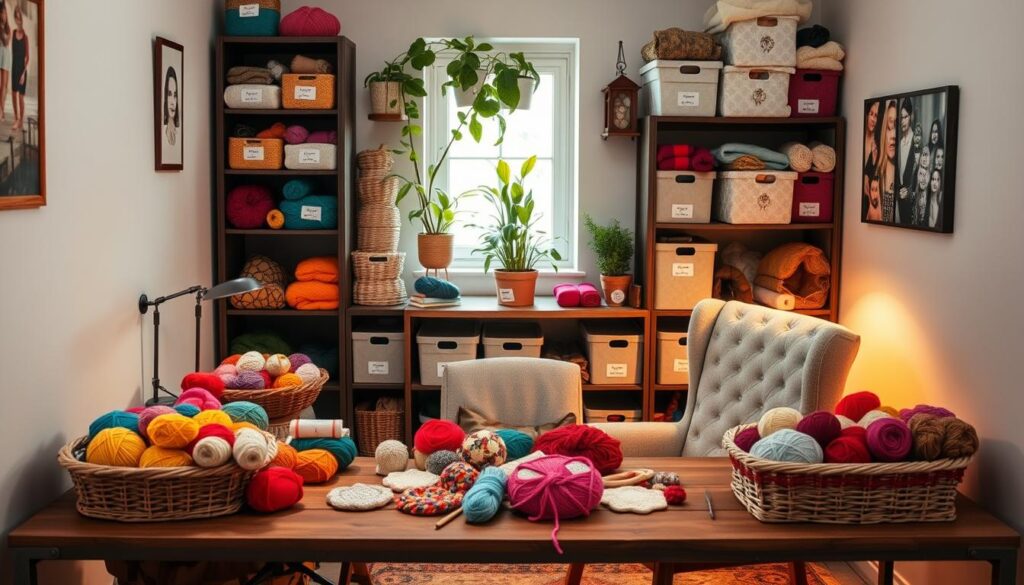
A compact corner can become the heart of your craft work when planned with purpose. Start by mapping how you move in the room and which items you reach most while working.
Defining Your Dedicated Corner
Pick a corner that gets good light and stays out of high traffic. Sarah chose the IKEA MICKE corner workstation because it fit neatly into her bedroom without overwhelming the room.
Having one defined spot kept her living room clear and reduced the time she spent chasing lost hooks or yarn.
Selecting Compact Furniture
Opt for pieces that offer storage without bulk. Sarah uses a small tower of drawers under her desk and another at her bedside to store pattern magazines and other supplies.
- Keep crochet hooks and small notions in labeled drawers.
- Store yarn in bins that tuck under the desk.
- Budget and plan the size of each piece to match your house and kids’ routines.
Maximizing Vertical Storage Solutions
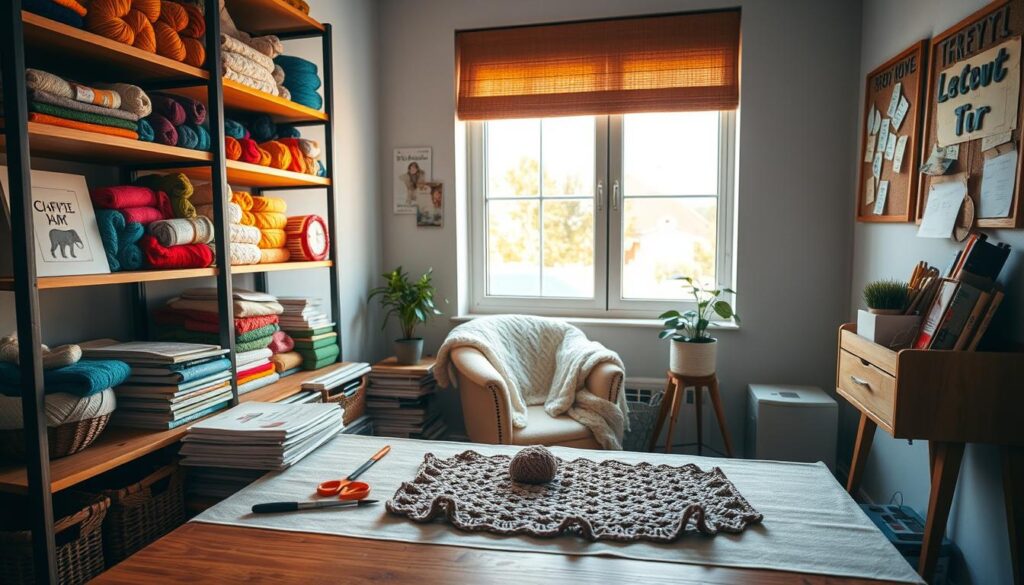
Tall shelving turns an otherwise cluttered nook into an efficient, vertical command center. Using the wall to stack storage gives you more usable floor area and a neater room.
Professional organizers often recommend building up before building out. Darcy Miller uses a large IKEA Kallax unit and two Billy bookcases to keep yarn and books tidy. This approach keeps supplies visible and reachable while freeing the floor.
Utilizing Wall Space and Shelving
Install a mix of open shelves and closed boxes to balance display and hidden storage. Open shelves keep patterns and tools within sight. Closed boxes hide bulk yarn and excess inventory.
- Place tall shelves against a main wall to store a lot of stock without crowding the floor.
- Use labeled bins on Kallax cubes and Billy shelves to speed finding the right yarn and notions.
- Try a closet shoe organizer to hold skeins that don’t fit in bins; Sarah found this saved space and kept yarn clean.
Good wall storage helps you keep a clean work area, which supports faster production of custom orders.
Essential Lighting and Ergonomic Considerations
A focused work lamp and an ergonomic seat are often the best investments in a home craft area.
Sarah improved her workspace by adding an Ott Lite she found on sale at a Costco in Canada. The extra light made fine stitches easier to see and cut down on mistakes during long custom orders.
Proper lighting is a critical part of any room design because it reduces eye strain and keeps you working comfortably. Darcy Miller reminds us that organization and inspiration must balance when planning a craft corner.
Practical tips to upgrade your space:
- Use a bright task lamp like an Ott Lite to highlight details and reduce shadows.
- Choose a supportive chair to protect your back during long sessions.
- Place the lamp so it illuminates the work without casting glare into your eyes.
- Keep a small inspiration board nearby to feed creativity while staying organized.
By investing in quality lighting and ergonomic furniture, this post shows how a well-lit corner helps you focus on the fine details of your crochet projects and keeps your craft room professional and inviting.
Organizing Your Yarn Stash and Notions
Simple bins and labeled shelves helped Sarah cut search time and protect her materials from curious kids. She began by removing excess yarn and donating two recycling bags to clear space and focus on useful skeins.
Categorizing by Weight and Fiber
Sort yarns by weight and fiber into clear tote bins. Label each bin with weight, fiber, and typical size so you grab the right yarn fast.
Managing Works in Progress
Keep WIPs in dedicated bins and place them on top closet shelves. This keeps the bedroom tidy and makes projects easy to resume.
Storing Crochet Hooks and Tools
Use an Umbra tool organizer from Michaels for crochet hooks, scissors, and measuring tape. A single organizer prevents loss, protects wooden tools, and keeps supplies within reach.
- Use recycled quilt bags for thread and extras.
- Keep patterns and current projects visible on one shelf.
- Categorize items so custom orders move faster and with less hassle.
Repurposing Household Items for Craft Storage
Turn old kitchen crates and toy chests into neat organizers to cut clutter and save money. Sarah spent about $320 CAD creating her craft corner, and much of that went to a few smart buys and second-hand finds.
She moved a large wooden cabinet into the living room to hold the kids’ puzzles. That freed up floor and shelf space in her room. It also kept patterns and supplies within reach when she worked on projects.
- Use kitchen crates as open cubbies for yarn and hooks.
- Convert a child’s dresser into labeled storage for patterns and notions.
- Buy a second-hand dress form to help with design and display.
Repurposing items saves money and keeps your home organized without sacrificing style.
“Reusing what you already own creates unique storage solutions and keeps the floor clear.”
| Item | Use | Benefit |
|---|---|---|
| Wooden cabinet | Kids’ puzzles in living room | Frees craft room space |
| Kitchen crates | Open yarn storage | Visible, easy access |
| Second-hand dress form | Pattern fitting | Professional look on a budget |
Conclusion
A tidy craft corner makes daily production smoother and gives you back minutes each day. Creating a dedicated room or nook helped many makers manage their yarn stash and speed up custom orders.
This post gave practical tips to keep supplies visible, protected, and easy to reach. With simple design choices and a clear plan, your home can host a workspace that supports both business and joy.
Whether you have one corner or a larger space, focus on function over cost. Spend time organizing tools and projects, and you will gain more productive time and love for crocheting. Celebrate progress—your dream setup began with a small plan.